The Property Room

Duplex Investing
in Australia

01What Is a Duplex & Why Investors Buy Them 02How Investors Create Equity & Build Wealth 03Duplex Planning Rules Across Australia 04Finding the Right Duplex Site 05Design: Single vs Double Storey 06Is a Duplex Right for You?
The Property Room · Investor Guide

Duplex Investing
in Australia

A complete, plain-English guide to building wealth with duplexes — equity creation, planning rules by state, site selection, design and whether a duplex is right for you.

6Chapters
~30 minRead time
2026Edition
Begin reading
What's inside

Six chapters, one goal:
buying the right duplex

Successful duplex investing is about far more than splitting one title into two. Here is everything an investor needs to weigh up — start to finish.

CHAPTER 01

What Is a Duplex, and Why Are Investors Buying Them?

For many property investors, the goal is simple: build wealth through a combination of capital growth, rental income and equity creation. A duplex can potentially deliver all three.

Over the past decade, duplex developments have become one of the most popular small-scale property investment strategies in Australia. They let investors build two dwellings on a single parcel of land, generate two rental incomes, and potentially create additional equity by the time construction is completed.

However, successful duplex investing is about far more than simply creating equity through subdivision. The best duplex investments combine four things at once.

Initial equity

Value created through the development process itself.

Strong rent

Two incomes instead of one, reducing vacancy risk.

Capital growth

Long-term growth is what ultimately builds wealth.

Exit options

Multiple ways to sell, hold or refinance later.

When these factors align, a duplex can become a powerful wealth-building vehicle.

THE BASICSWhat is a duplex, exactly?

A duplex consists of two separate dwellings constructed on a single parcel of land. The two homes are typically attached by a common wall and are often built as side-by-side mirror images, custom designs to suit the land, corner-lot designs with separate street frontages, or single- and double-storey layouts.

Upon completion, the property is typically subdivided into two separate titles — allowing each dwelling to be sold, refinanced or retained independently. Most duplex developments include a small body corporate to manage shared insurance or common property, though ongoing costs are usually far lower than a townhouse complex or apartment building.

Each dwelling generally has its own:

Garage Front entrance Outdoor living Utility services Private tenancy
Don't confuse the two

Dual Occupancy vs Duplex

Dual Occupancy

Two dwellings, one title

  • Both homes sit on a single title
  • Sold and financed together
  • Less flexibility to separate later
Duplex

Two dwellings, two titles

  • Subdivided into two separate titles
  • Sell, refinance or retain each independently
  • Sell at different times, or pass to family
vs

The ability to create two separately titled properties is one of the major reasons duplexes have become so popular with investors.

THE APPEALWhy investors buy duplexes

Duplexes offer several advantages that are difficult to achieve through traditional residential property investing — starting with the ability to create equity during the development process.

0%

Potential equity uplift

Well-selected projects can potentially deliver 10–20% total equity uplift by completion — through creating two titles, market growth during construction, and demand for the finished product.

Rental income

Two dwellings mean two rental incomes, reduced vacancy risk, improved cash flow and stronger servicing capacity for future borrowing.

0+

Exit strategies

Hold both, sell one and keep one, sell both, refinance and access equity, or live in one — few residential strategies offer this flexibility.

A worked example

A $1.5M duplex package, at completion

A duplex package costing $1.5 million may potentially be worth between $1.65 million and $1.8 million at completion — creating $150,000 to $300,000 in additional equity. This is often called manufactured equity, although market growth during construction frequently contributes a large share of the final result.

A REALITY CHECKNot every duplex site is a good investment

One of the biggest misconceptions in the market is that every duplex development automatically makes a good investment. The reality is that success depends heavily on location. Many duplex developments require large blocks, suitable frontage, appropriate zoning, council support for subdivision and strong end values.

As land prices rise — particularly in Brisbane, Sydney and Melbourne — suitable duplex sites have become harder to secure at prices that make financial sense. In some locations, investors may actually do better by subdividing land into two separate housing lots and building detached homes instead.

WHERE TO LOOKWhere most opportunities are found today

Some of the most affordable opportunities are now found in regional cities and outer growth corridors, where land remains relatively affordable and lot sizes are larger.

MackayTownsvilleHervey BayToowoombaGladstoneCairnsWestern Sydney corridorsNewcastle region

Affordability alone is never the reason

The best duplex investments combine affordability with strong long-term growth fundamentals — population growth, employment, infrastructure spending, low vacancy and owner-occupier demand.

Creating equity at completion is only the beginning. The majority of wealth is created through capital growth over the following decade.
Chapter One · The Property Room
CHAPTER 02

How Duplex Investors Create Equity and Build Long-Term Wealth

Unlike a traditional property that relies entirely on market growth, a duplex can potentially create value through a combination of development, subdivision and market appreciation.

One of the biggest misconceptions surrounding duplex investing is that all of the profit comes from simply splitting one title into two. The reality is far more nuanced. Equity can come from several sources at once.

THE SOURCESWhere duplex equity comes from

Title creation

Creating two separate titles from one site — each able to be sold, refinanced or retained independently, often worth more combined than the original site.

Market growth

Most projects take 12–18 months. If the suburb grows during that window, a large share of the equity at completion is really market growth.

Buyer demand

A completed duplex appeals to investors, first home buyers, downsizers and owner occupiers — and strong demand lifts end values.

A realistic target

10–20% equity uplift on a $1.5M project

Total project cost vs completion value

Same $1.5M build cost — three completion scenarios

$1.5M
Project costYour outlay
+$150k
$1.65M+10% uplift
+$225k
$1.725M+15% uplift
+$300k
$1.8M+20% uplift
Project cost
Equity created at completion

Illustrative example only — not a forecast or guarantee. Uplift combines title creation, market growth during construction and demand for the completed product.

This uplift can improve loan-to-value ratios, open refinance opportunities and add borrowing capacity — but it should never be the sole reason to buy.

The biggest mistake duplex investors make

Becoming fixated on equity at completion. A duplex that creates strong equity but grows slowly over the next decade can be a poorer investment than one that creates less equity but delivers superior long-term growth. Manufactured equity is only the beginning of the journey.

When it all comes together

The three drivers of duplex success

01

Equity creation

Value created during development through title creation and market growth.

02

Rental performance

Two rental incomes that often provide stronger cash flow than a traditional house.

03

Long-term growth

A location capable of delivering capital growth for many years after completion.

The goal of duplex investing is not to split one title into two. It is to create a high-quality investment you can hold for the long term.
Chapter Two · The Property Room
A site suitable for a duplex in one location may be completely unsuitable just a few kilometres away.
Chapter Three · Planning
CHAPTER 03

Duplex Planning Rules Across Australia

One of the biggest misconceptions is that if you can find a large block, you can simply build a duplex. Unfortunately, it is not that simple.

Duplex development is heavily influenced by planning rules, zoning, council regulations, subdivision controls and developer covenants. There is no single national standard — each state has its own planning framework, and local councils typically apply additional controls on top.

Before purchasing any site, factors commonly assessed include:

ZoningMinimum lot sizeFrontageBuilding setbacksPrivate open spaceCar parkingSubdivision rulesInfrastructure capacity
State by state

How duplex-friendly is each state?

Tap a state to see how the planning landscape differs. Every site must still be assessed individually.

Queensland

Generally duplex friendly

One of Australia's most popular duplex markets. There is no statewide rule allowing duplexes on every block — councils set their own schemes — but many builders use ≈800m² and a ≈20m frontage as a practical starting point that works across many council areas and master-planned communities.

Local overlays, character and flood/bushfire constraints, and estate covenants can still influence potential, so every site is assessed individually.

~800m²Typical land area
~20mTypical frontage

New South Wales

Traditionally strong

Historically one of Australia's strongest duplex markets, but approvals are driven heavily by individual council planning controls — minimum lot sizes, frontage, floor space ratios, building envelopes, parking and open space all vary between councils.

Strongest activity is often found in Western Sydney growth corridors, Newcastle and the Hunter, and the Central Coast. Because controls vary so much, detailed due diligence is essential.

South Australia

Emerging market

Increasingly popular thanks to lower land prices, strong population growth and relative affordability compared with Sydney and Brisbane. Many Adelaide growth corridors still offer opportunities that have become hard to find in the larger eastern capitals.

This can let investors enter at a lower overall project cost while still benefiting from separate titles and strong rental demand.

Western Australia

Strong potential

Increasingly attractive for duplex development. Strong population growth, housing shortages, affordable land and infrastructure investment have created opportunities across Perth growth corridors.

Compared with many eastern-state markets, feasibility can often be more attractive due to lower land acquisition costs.

Victoria

A different environment

Duplex developments occur throughout Victoria, but many investors find the planning environment more complex and less straightforward than in parts of QLD, NSW, SA and WA. Council requirements, neighbourhood character and planning overlays can significantly affect outcomes.

As a result, many duplex-focused investors concentrate on states where planning pathways may be more predictable.

A PREMIUM SITEWhy corner lots are so sought after

When experienced developers assess sites, corner lots attract significant attention. They can offer separate street frontages, improved privacy, better vehicle access, stronger owner-occupier appeal and more flexible design outcomes — sometimes each dwelling can effectively appear to occupy its own street address. Corner lots aren't essential, but they often improve resale appeal.

The hidden challenge: developer covenants

The biggest obstacle today is often not council approval — it's developer restrictions. Many master-planned estates include covenants that prohibit future subdivision, certain dwelling types or additional density. A site can look perfect but be impossible to subdivide after completion. Reviewing covenants is just as important as reviewing council controls.

Before buying any site, ask one question: is this the highest and best use of the land?
Chapter Three · The Property Room
CHAPTER 04

Finding the Right Duplex Site

Many investors assume the hard part is finance, builders or construction. In reality, the most difficult part is often finding the right block of land.

A quality site determines whether a project creates significant equity, generates strong rent and delivers long-term growth — or struggles. This is why experienced investors spend far more time assessing land than assessing floor plans.

At first glance many blocks appear suitable. But a site must satisfy several important criteria first. Tick off what a strong duplex block needs:

0 of 11 checks confirmed
  • Zoning and planning controls allow a duplex
  • Adequate lot size and frontage
  • Workable lot shape and configuration
  • Estate covenants permit subdivision
  • Manageable topography and slope
  • Sound soil conditions (low rock risk)
  • Services and infrastructure available
  • Genuine subdivision potential
  • Strong end values (comparable sales)
  • Strong rental demand
  • Long-term growth prospects

A block that looks attractive on a brochure can quickly become expensive if these are overlooked.

HIDDEN COST #1Sloping blocks can quietly blow the budget

A sloping block may look attractive because it's priced below surrounding land — but the saving can disappear once site works are factored in: cut and fill, retaining walls, split-level designs, drainage and stepped footings.

Site fall across the block
<1m
1–2m
ideal
2–8m — workable where strong end values justify the extra site costs
Flat2m4m6m8m+

An ideal site often has around 1–2m of fall — enough for drainage without excessive excavation. Many successful projects are still built on 2–8m of fall, particularly in Newcastle, the Hunter, Western Sydney and coastal Queensland, where end values justify the cost.

"Is the block sloping?"
The real question: "Do the end values justify the additional site costs?"

Hidden cost #2: rock excavation

Parts of the Newcastle and Hunter regions are known for rock. Unexpected rock removal adds delays, machinery and disposal costs — and is often excluded from fixed-price building contracts. Costs can range from a few thousand to tens of thousands of dollars. Where there's any rock risk, a geotechnical report before committing can be money very well spent.

HIDDEN COST #3Infrastructure and services

Investors often focus on the visible site while overlooking sewer locations, water connections, stormwater discharge, electricity infrastructure and easements. A site with excellent dimensions can still become problematic if services are difficult or expensive to connect — affecting design, cost, subdivision and approval timeframes.

Because affordability has become a challenge in the capitals, many opportunities are now concentrated in regional centres and outer growth corridors — Mackay, Townsville, Hervey Bay, Toowoomba, Gladstone, Cairns, Western Sydney, Newcastle and the Central Coast. But affordability alone is never enough: the best sites combine it with strong economic fundamentals and long-term growth.

The most profitable duplex projects are not built on the flattest sites. They're built where end values comfortably exceed total development costs.
Chapter Four · The Property Room
The goal is not to fit two dwellings on a block. It's to create two homes people genuinely want to live in.
Chapter Five · Design
CHAPTER 05

Duplex Design: Single vs Double Storey

Once the right block is secured, design has a major impact on construction feasibility, end values, rental demand, tenant appeal and future resale.

There is no one-size-fits-all duplex design. The ideal layout depends on lot dimensions, frontage, slope, local demand, budget, council requirements and the end-buyer profile. Successful developers let the land influence the design — not the other way around.

Single storey

Space and accessibility

  • Appeals to downsizers and retirees
  • Easier accessibility, less stair maintenance
  • Often cheaper to construct
  • Common across regional QLD, NSW, SA & WA
  • But needs larger footprints — and larger sites
Double storey

Efficiency on costly land

  • Smaller footprint, better use of small lots
  • Larger internal living, family-sized homes
  • Works on narrower sites
  • Upper levels can capture breezes, views & light
  • Higher build cost, but often stronger end values
vs
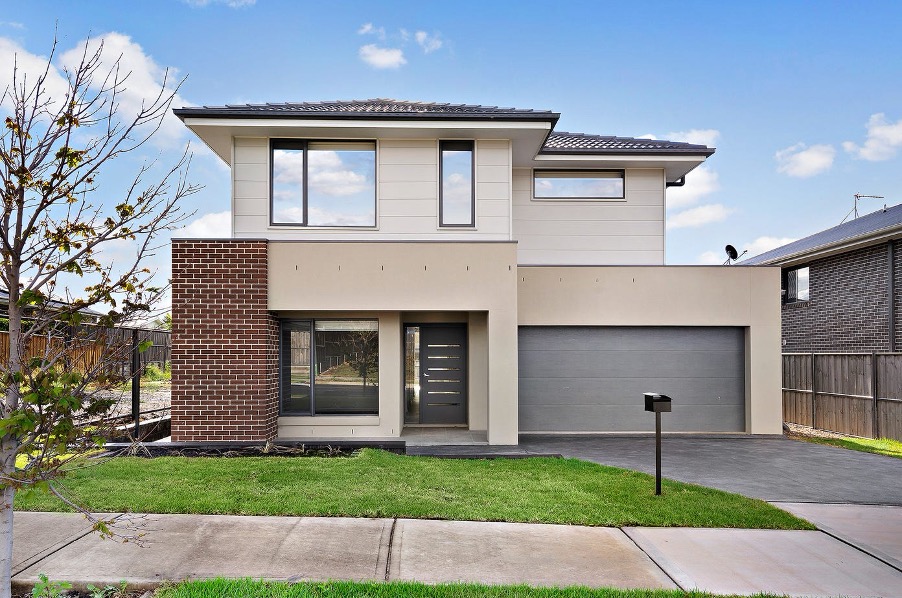
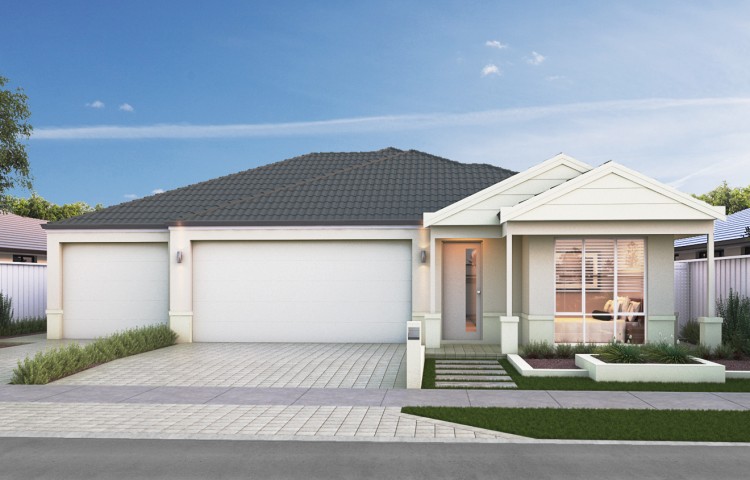
Single storey
Single-storey duplex with feature entry and garage
Space, accessibility and easier construction — needs a larger site
Double storey
Modern double-storey home, Glenmore Park
Smaller footprint and stronger end values on higher-value land

THE MOST POPULAR LAYOUTSide-by-side & mirror image

The majority of Australian duplexes are built side-by-side. These layouts create clear separation between dwellings, simplify subdivision, appeal to owner occupiers and support straightforward construction. Many use mirror-image plans — each dwelling the reverse of the other — which simplifies design, engineering and cost control.

But not every duplex has matching plans. Irregular shapes, tapered blocks, sloping sites, corner lots and narrow frontages often call for custom solutions with different floor plans, garage locations and outdoor areas. The best developers design around the site rather than forcing the site to fit a standard plan.
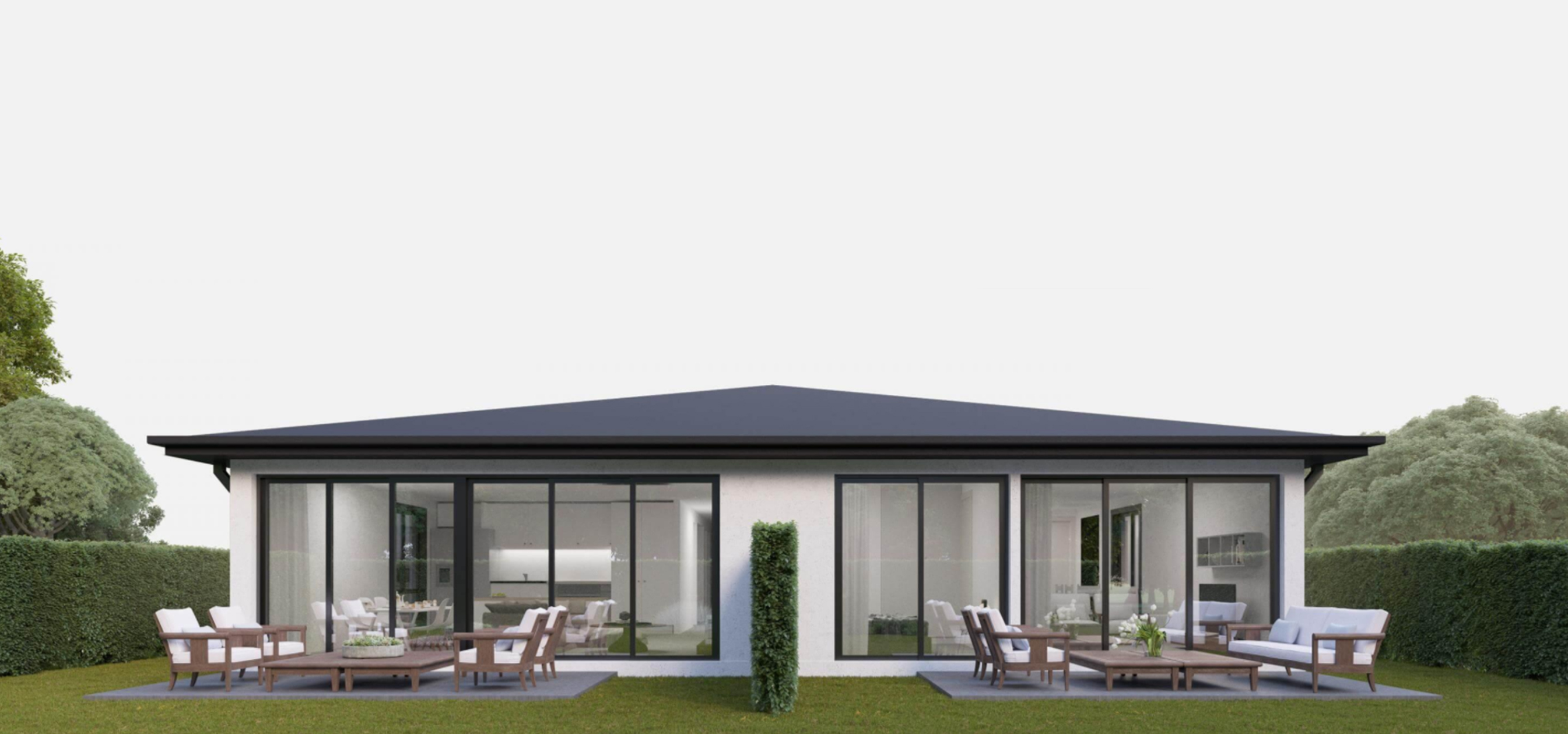
Two attached side-by-side dwellings sharing a central wall
A side-by-side layout — two mirrored dwellings sharing a central wall, each with its own private living

Privacy matters more than size

Most buyers and tenants care more about privacy than a few extra square metres. Good designs minimise noise transfer, shared outdoor areas, direct overlooking and shared driveways — using separate entries, independent garages, fencing, landscaping and strategic window placement. The more a duplex feels like a standalone home, the stronger its appeal.

First impressions

Street appeal: garages vs balance

Owner occupiers often decide within the first few seconds — and they generally pay more than investors.

✕ Avoid
Garage Garage

Garage-dominated facade

Two double garages fill the frontage, with small front doors squeezed between them. The property looks bulky and lacking character — and it's harder to sell.

✓ Aim for
Entry Garage

Balanced, home-like facade

A feature entry, windows, varied rooflines, a recessed garage and landscaping break up the garages — so it reads as two quality homes, not one big building.

DESIGN FOR DEMANDRent today, resell tomorrow

Duplex tenants are often families, downsizers, professionals and long-term residents — so practical features matter: three or four bedrooms, double garages, air conditioning, open-plan living, study areas and low-maintenance landscaping. Quality outdoor living — private courtyards, functional backyards, entertaining space — significantly lifts both rental demand and resale appeal, especially in Queensland.

And remember that one day the property may be sold. Owner occupiers typically pay more than investors, so street appeal, privacy, functional layouts, natural light, storage, parking and outdoor living all support stronger long-term capital growth.

Successful duplex investing isn't about building two dwellings. It's about creating two desirable properties people want to live in.
Chapter Five · The Property Room
CHAPTER 06

Is a Duplex Right for You?

We've explored what a duplex is, how investors create equity, planning, site selection and design. The final question is perhaps the most important — and the answer depends on you.

A duplex combines property investment and property development. Many investors take one on after a standard house-and-land build, though some succeed with a duplex as their first project. Compared with buying an established property, it carries additional risks — land acquisition, construction, site works, subdivision, valuation risk and holding costs during construction. For some, that complexity is worth it. For others, a simpler strategy fits better.

A duplex may suit you if…

You're looking for

  • Stronger rental income than a traditional house
  • Multiple exit strategies and flexibility
  • Exposure to new property
  • Potential equity creation during construction
  • A medium-to-long-term investment horizon
  • The option to sell, refinance or retain each home
A duplex may not suit you if…

You have

  • Limited borrowing capacity
  • A need for immediate cash flow
  • Discomfort with construction timeframes
  • A preference for fully hands-off investing
  • A very short investment timeframe
  • No appetite for a simple body corporate
?
A quick gut-check

Where do you sit right now?

Six honest questions

Tap Yes or No. This is a personal reflection, not financial advice.

I'm comfortable with a 12–18 month construction timeframe
I have (or can build) the borrowing capacity for a build
I can hold a cash buffer for unexpected delays or site costs
I'm investing for the medium-to-long term, not quick cash
I value flexibility — the option to sell, hold or refinance each home
I'm happy to manage a small body corporate

THE REAL PRIORITYThe right property matters more than the strategy

Some investors hold both dwellings long term. Others sell one to reduce debt, refinance to keep building a portfolio, or live in one and rent the other. None of these is automatically right or wrong — the best strategy depends on your goals and circumstances. Which is why understanding the investor is just as important as understanding the property.

Many investors spend a lot of time on strategy. In our experience, the more important question is: are you buying the right asset in the first place? A great strategy applied to a poor property rarely produces exceptional results. A quality property in a strong location can outperform a sophisticated strategy built around a weaker asset.

Manufactured equity may help you get ahead. Long-term growth is what ultimately builds wealth.
Chapter Six · The Property Room
Finding the right duplex starts with understanding the investor

Wondering if a duplex is right for you?

Let's have a chat. Fill in your details below and tell us what you want to do, and we'll be in touch to discuss your options and see if we can work together.

If not, our brokers can give you an obligation-free indication of potential budget.

Note: Should you proceed with our services, a separate engagement agreement will be provided based on the level of service you require.

Thank you!

We've received your details and one of our property advisers will be in touch shortly.